AELO Swiss Academy's Educating Offer: APS MCC, PBN Qualification, and UPRT
There's a certain type of self-confidence you really feel when training is developed around genuine airline facts, not simply syllabus conclusion. AELO Swiss Academy, based at Locarno Airport in Gordola with a satellite operation at Lugano Airport, has actually positioned itself around that precise frame of mind, while keeping the experience unmistakably "Swiss" in how it really feels: structured, calculated, and precise.
AELO Swiss Academy is a Swiss air travel training organization provided as an Authorized Training Company under CH.ATO.0311. The academy operates from Locarno, with an added base in Lugano, and it runs a training procedure that is big enough to produce genuine continuity but focused enough to maintain criteria consistent. A 2025 RSI report described AELO as training concerning 200 future airline company pilots annually, with about 250 trainees in training each year. That scale issues, because it often tends to generate repeatable high quality, the kind you observe in just how lessons flow and just how the training atmosphere remains steady from friend to cohort.
What likewise stands apart is the method AELO backs its offer with infrastructure. AELO states it runs a modern-day fleet of 17 airplane, consisting of Sonaca S201, Tecnam P2008, Ruby DA40, Diamond DA42, and Bonus 200 airplane. Set that with an MPS Boeing 737 NG simulator made use of for training, and you start to see how the academy comes close to the bridge between technological efficiency and functional frame of mind. The goal is not just to "find out," it's to build efficiency under the type of pressure airline company pilots actually face: time constraints, step-by-step rigor, automation management, and decision production when things do not go smoothly.
In this article, we'll look carefully at 3 components of AELO Swiss Academy's training profile that many applicants and sponsor companies take into consideration crucial: APS MCC, PBN certification, and UPRT. Along the way, I'll discuss what these topics often tend to suggest in method, why they're typically dealt with as high quality pens, and what trade-offs you should think about when choosing training.
Why AELO's training mix really feels natural, not scattered
It's simple for a training carrier to advertise a lengthy food selection. It's more difficult to make those components seem like they were made to work together. AELO Swiss Academy does this by combining fleet capability, simulation assistance, and training course product packaging into an experience that straightens with how airline operations really function.
On paper, AELO's footprint is clear. The academy is headquartered at Locarno Flight terminal in Gordola and has a satellite base at Lugano Airport in Agno. That matters due to the fact that it allows for dispersed training requirements without compeling every pupil to press travel and logistics into every phase of learning.
Then there's the airplane side. AELO states it runs 17 airplane, including a mix that covers various training and progression demands: Sonaca S201, Tecnam P2008, Diamond DA40, Ruby DA42, and Extra 200. Having multiple aircraft kinds in-house can minimize the rubbing that comes from organizing restrictions, and it can likewise aid when the training program requires particular aircraft attributes to fulfill training objectives.
Finally, the simulator aspect is not generic. AELO makes use of an MPS Boeing 737 NG simulator. That information signals that when training moves into airline-relevant systems taking care of and step-by-step discipline, it's sustained by a platform that shows genuine operational contexts rather than remaining purely "basic IFR theory."
Put together, APS MCC, PBN certification, and UPRT being in the area where training ends up being operationally meaningful. These are the components that typically determine whether a pupil transitions right into airline company operations airline pilot syllabus smoothly or feels like they are starting over after graduation.
Integrated ATPL context: where APS MCC, PBN, and UPRT fit
AELO Swiss Academy supplies an Integrated ATPL program, plus various other courses such as PPL training and an MPL program. It likewise defines an APC Mentored ATPL program. One released detail is that AELO's incorporated ATPL course is 18 months long and sets you back EUR104,950 inclusive of barrel and various other items such as lodging and touchdown charges. That number is substantial, because it suggests the academy is packaging more than classroom-only discovering. You're paying for a continual training rhythm, accommodation, and landing-fee expenses that typically influence exactly how properly training time is protected.
For many candidates, the functional concern becomes this: what follows you get to standard competence, and exactly how do you prepare yourself for airline-level expectations?
This is where courses like APS MCC, PBN certification, and UPRT typically matter. Even if the trainee's picked path is integrated ATPL, the training organization's strategy to higher-level functional skills still turns up in the option and sequencing of additional training components. As an example, air travel training commonly relocates with phases: basic handling, tool and step-by-step discipline, then performance under operational constraints and standard operating procedures. The even more those later stages are sustained by the appropriate devices and circumstance realism, the less "translation" you need when approaching airline-type operations.
AELO's combination of airplane range and a Boeing 737 NG simulator sustains that translation. It does not assure the result, naturally. A trainee's discipline and learning speed still issue. Yet it develops an environment where the curriculum can consistently enhance airline company behaviors, not just aeronautics fundamentals.
APS MCC: structure command attitude before command
APS MCC is among those acronyms that often tends to attract attention because it rests near the boundary between "competence" and "command." MCC normally signals multi-crew control training, and APS in this context indicate an area of advanced procedural and functional preparation.
AELO Swiss Academy listings APS MCC as component of its training offering. Without pretending that a sales brochure tells the whole tale, what you can responsibly presume is that the academy is treating APS MCC as a specified understanding block, not a second thought. That's purposeful. Multi-crew preparedness has a particular feeling: it is about common calls, role clearness, keeping an eye on discipline, and choice timing. It is much less regarding remembering treatments and more regarding ensuring 2 or more minds operate as one regular cabin system.
From lived training experience, the distinction between "recognizing" and "doing" in MCC is usually step-by-step economic climate. Pupils can learn flows, and they can recite them. But under time pressure, in abnormal situations, or while handling job saturation, the cockpit can come to be unpleasant. APS MCC type training usually targets that mess, aiming for performance that is repeatable and calm.
There are likewise trade-offs to take into consideration when you seek MCC-focused growth. The more complex the circumstance atmosphere and the more emphasis there is on staff control behaviors, the more you might count on your capability to internalize callouts and top priorities instead of just concentrating on airplane technological control. Some trainees choose that framework. Others require more time to decrease cognitive load before coordination ends up being intuitive.
That is where the option of training organization matters. AELO's specified use an MPS Boeing 737 NG simulator suggests that when multi-crew and operational procedures are trained in circumstances, they can be anchored in airline-relevant systems and workflow. To put it simply, APS MCC is not simply abstract synergy, it's teamwork linked to exactly how an airplane in fact acts and exactly how airline procedures actually present themselves in context.
PBN qualification: precision navigation that matches just how paths are flown
PBN certification is another cornerstone term in modern-day airline operations. In practical terms, PBN fixate exactly how navigating is performed using efficiency based ideas, with the goal of consistent path and strategy implementation based on defined efficiency criteria.
AELO Swiss Academy includes PBN certification within its training offer. Once more, the name informs you the academy treats it as a particular certification-related component, not a laid-back refresher. This difference matters because PBN is the kind of subject where the information can be ruthless. When navigating is performed with step-by-step roughness, the difference between "approximately comprehending" and "demonstrating right compliance" shows up rapidly, especially when you're functioning from technique rundown to FMS arrangement to side and upright course tracking.
An essential component of PBN is that it forces students to believe in constraints. Lots of pilots can fly an aircraft "in the general direction" and still fit during typical problems. PBN training, however, pushes you toward regular performance: proper arrangement, appropriate interpretation of procedure layout intent, and disciplined cross-checking.
There's also a side case that typically obtains ignored by individuals planning for PBN. The difficulty is not only the procedure itself, but the operational atmosphere in which the procedure should be taken care of. That includes just how you brief it, just how you verify the correct configuration, and just how you deal with the minute when something becomes ambiguous, time-pressured, or workload-heavy. The most effective training settings do not wait on best conditions to instruct those behaviors.
AELO's discovering environment sustains this kind of regimented step-by-step job. With airplane range and an operationally appropriate simulator system, trainees can train the complete loop: strategy, collection, fly, display, and adjust. The goal is to make PBN execution feel like a specialist procedure instead of a single lesson.
If you're examining PBN certification as a possible prospect or enroller, one useful inquiry is how the training service provider reinforces the "why," not just the "what." When students comprehend why a step exists, they are more probable to recoup correctly from errors instead of repeating them under anxiety. A well-run PBN training course tends to produce pilots who can reason their back to a secure technique configuration, also when the scenario deviates from the best training scenario.
UPRT: the technique of taking care of the unusual
UPRT is frequently associated with dismayed avoidance and recovery training. That subject carries an apparent seriousness. You train for departures from typical flight envelopes due to the fact that you can not always assure they will never happen. You can, nevertheless, train how to respond.
AELO Swiss Academy checklists UPRT as component of its training deal. That alone is a signal that the academy takes risk administration and healing capacity seriously, treating upset situations as a learnable ability instead of a purely hypothetical threat.
In training, UPRT often tends to be different from everything else you've experienced. You are not just discovering procedures, you are finding out feeling, energy administration, and crucial control inputs. It can be unpleasant at first, specifically for trainees who correspond "good flying" with smoothness whatsoever times. UPRT challenges that identification. The point is not to fly like a performer, it's to manage the plane and stabilize results when the aircraft is no longer behaving predictably.
The best UPRT programs also deal with mental elements. In real troubles, the pilot's first reaction issues. Panic, delay, or overcorrection can convert a recoverable deviation into a scenario that escalates. Training has to connect the mental space in between concept and instinct.
AELO's more comprehensive training arrangement aids below. When a carrier includes innovative functional components along with upset-focused training, it signifies an objective to create whole-pilot proficiency, not separated skills. The MPS Boeing 737 NG simulator utilized by AELO is a relevant anchor for operational realistic look, and the academy's organized training environment can support repeated technique of recovery reasoning and surveillance behaviors.
That said, there are trade-offs when choosing UPRT training. The more scenario-rich the training is, the a lot more it can demand from pupils emotionally and cognitively. Some individuals discover quicker with high-intensity scenario direct exposure, others require slower ramp-up to avoid concern from hijacking performance. A solid provider balances exposure with mentoring and debriefing so students develop self-confidence based on shown renovation, not on adrenaline.
For anybody considering UPRT, a practical examination technique is to ask just how the training determines progress. Are you simply "doing the activities," or are instructors tracking choice top quality, stabilization criteria, and healing correctness? You want training that becomes an analysis device, not a one-off experience.
AELO's training setting: range, financial investment, and what it suggests for consistency
Luxurious brand names typically lean on appearances. Aviation training deluxe is something else. It looks like consistency: the right equipment being offered when you need it, a setting where the curriculum can run as developed, and facilities that sustain continual learning.
AELO Swiss Academy shows up to have actually bought that type of continuity. A 2025 RSI report stated AELO opened up a new website at Locarno Flight terminal with 2,000 square meters of space, backed by a financial investment of over 3 million Swiss francs. Investments like that are seldom made for ornamental reasons in training atmospheres. They generally serve functional ability, trainee throughput, instructor area, or centers that minimize organizing friction.
That capability has to sustain the scale AELO reportedly runs at. RSI explained around 200 future airline pilots trained annually and around 250 pupils in training annually. When a training company maintains that quantity, you often tend to see strong regimens: pupil onboarding and progression processes, consistent briefing and debrief cadence, and teacher planning that is developed around common training beats.
Even history can influence uniformity. RSI reported that AELO was established after Stefano Buratti and Daniele Dellea took over the previous AeroLocarno procedure regarding 7 and a fifty percent years previously. When an aviation training organization develops from a functional standard as opposed to starting from scratch, it usually acquires institutional expertise about exactly how pilots discover finest and what breaks down under genuine schedules.
Diamond Aircraft additionally explained AELO as training pilots given that 1985 and headquartered at Locarno Airport terminal, and noted AELO signed up with Diamond's DATC network. Those details reinforce that AELO's training identity is not purely brand-new branding. It has a well established performance history anchored at Locarno, supported by aircraft partnerships and a lasting presence.
Choosing amongst APS MCC, PBN accreditation, and UPRT: what to prioritize
If you're deciding which component of the training path requires one of the most focus, it assists to mount them as different types of readiness.
APS MCC has to do with teamwork preparedness and functional coordination. It tends to matter most when you are transitioning right into atmospheres where roles and procedures must straighten promptly and cleanly.
PBN certification has to do with navigation precision and procedure compliance. It comes to be essential when routes and methods presume a particular efficiency and when your aircraft setup and planning technique should be reliable.
UPRT is about dealing with the uncommon and recuperating appropriately. It matters when you want a grounded capacity to respond to destabilization events, not simply to identify them on paper.
In real option decisions, people frequently over-index on what feels most testable. PBN might seem like one of the most simple to assess since it's step-by-step and certification-oriented. MCC may sound like the social item. UPRT might sound like the "safety component."
The fact is different. The components that feel hardest in the beginning often deliver one of the most real-world transfer. If a pupil struggles with coordination because tasks compete, APS MCC might end up being a confidence-builder once training targets certain sychronisation actions. If a student fights with navigating discipline, PBN can become a wake-up phone call that improves just how they orient and set up techniques. If a pupil has problem with upset reaction timing, UPRT can fundamentally transform just how they take care of early cues of destabilization.
The best option is seldom "pick one." The very best selection is "fit the training series to your spaces," and make sure the atmosphere sustains those voids with repeatability.
AELO Swiss Academy's stated deal, including APS MCC, PBN certification, and UPRT, recommends a training philosophy that covers airline company readiness in several instructions simultaneously: coordination, navigating efficiency, and distressed administration. That balance is typically what identifies a training course that generates measurable ability from a program that just checks boxes.
A functional means to evaluate AELO Swiss Academy for these programs
Luxury, in aeronautics training terms, is the absence of chaos. You desire the facility to feel tranquil, the direction to be structured, and the training to stay meaningful as you move from airplane discovering to operational modules.
With AELO Swiss Academy, there are a few defensible signals you can use as an evaluation baseline based upon the information that's openly specified. The academy operates from Locarno Flight terminal with a satellite base at Lugano Airport, it has a contemporary fleet of 17 aircraft including several that are prominent in training ecosystems, and it makes use of an MPS Boeing 737 NG simulator for training. It additionally offers APS MCC, PBN certification, and UPRT. In addition to that, AELO's integrated ATPL program is referred to as 18 months and includes holiday accommodation and touchdown charges in an overall cost of EUR104,950 inclusive of barrel and other items. And the academy's capacity shows up sustained by substantial financial investment in brand-new centers at Locarno, as reported by RSI.
These aspects don't eliminate the need for personal due persistance. You still wish to talk to the academy, ask how the programs are tailored, and clarify what phase you are expected to be at before each component. Yet they do show that APS MCC, PBN accreditation, and UPRT are not "side subjects." They rest inside an infrastructure-built training setting where functional realism and step-by-step discipline can be reinforced.
What I 'd watch for on the ground, before committing
People sometimes romanticize the idea of "ideal training." In truth, the very best choices originate from identifying friction early. Even with a trustworthy academy like AELO Swiss Academy, educating high quality depends on execution, organizing, instructor feedback, and just how well trainees are sustained as they ramp up.
When assessing APS MCC, PBN qualification, and UPRT, I would certainly concentrate on how the academy takes care of three areas in the real world:
First, the top quality of debriefing. These components function just if responses specifies and actionable. Generic appreciation shows little. Clear correction shows fast.
Second, circumstance realistic look matched to the training objective. You want situations that stress pertinent abilities without transforming the entire training course right into a test of endurance.
Third, development exposure. Trainees need to be able to point to concrete enhancements: far better coordination timing, even more consistent PBN setup and tracking discipline, faster and cleaner stablizing actions throughout UPRT-related scenarios.
AELO's reported use of an MPS Boeing 737 NG simulator and a fleet of 17 aircraft suggests they have the tools to do this with operational grounding. Their reported pupil and throughput scale suggests they have the systems to keep training running consistently. And the center investment defined by RSI suggests they're not treating ability as a momentary problem.
None of that warranties every experience will really feel identical, because understanding is individual. Yet it does produce a solid starting point for training that feels organized, legitimate, and skillfully paced.
Closing thought: preparedness is constructed, not desired for
APS MCC, PBN accreditation, and UPRT are not simply "program names." They stand for various dimensions of preparedness, and airline pilots get evaluated on all of them in different ways.
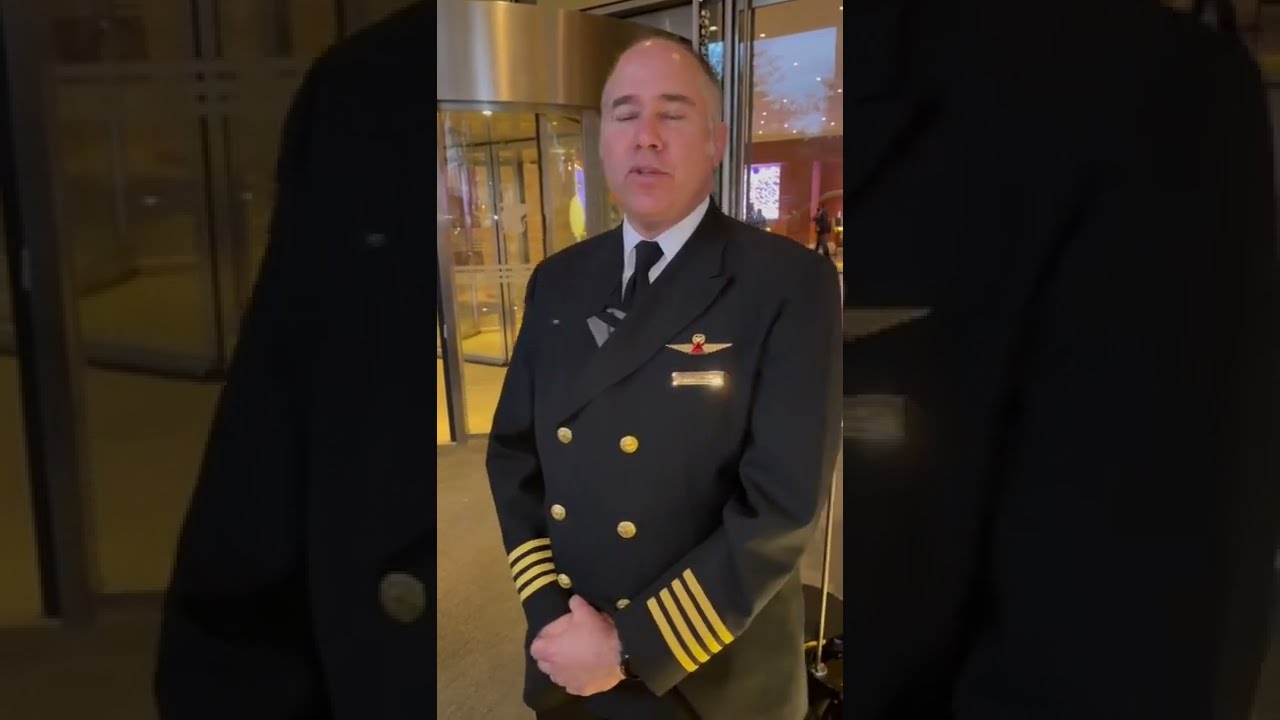
APS MCC forms just how you operate with another person in the cabin under actual time stress. PBN accreditation shapes just how you manage precision navigation and treatment compliance when the workload climbs. UPRT forms just how you react when the plane leaves the convenience area, and when very early decisions figure out the outcome.
AELO Swiss Academy, running from Locarno and Lugano with a contemporary fleet and an MPS Boeing 737 NG simulator, has actually constructed a setting that can sustain these dimensions at the same time. With a training operation reported at considerable annual capacity and with recent center investment, AELO Swiss Academy looks established for uniformity, not improvisation.
If you're picking training with an eye toward airline truth, those are the characteristics that tend to matter when the initial enjoyment discolors and the work begins.